























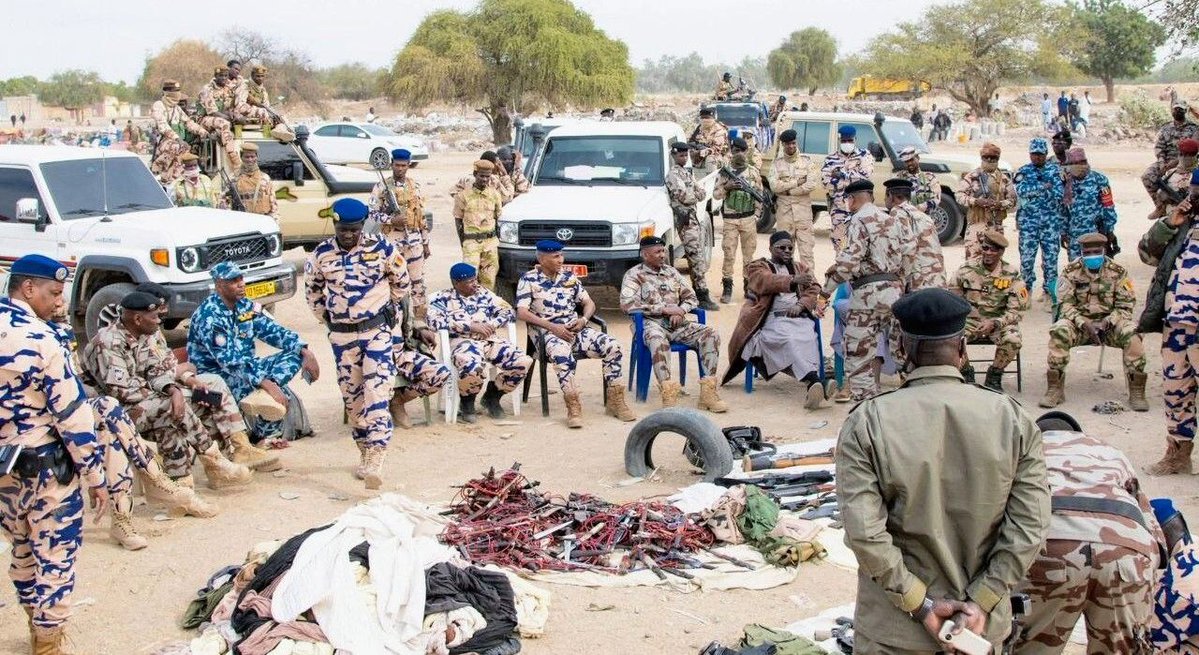
Chadian authorities have intensified security operations in N’Djamena following the recovery of a substantial cache of weapons and ammunition during a joint sweep across key districts of the capital. The operation, conducted in the 10th and 2nd arrondissements, underscores the government’s growing concern over the proliferation of illegal arms and the expanding footprint of criminal networks in urban areas.
Details of the Operation
Security forces seized:
- 28 pistols
- 14 additional firearms
- Over 1,000 rounds of assorted ammunition
- Six vehicles linked to criminal activity
- Various pieces of military equipment
Two individuals were arrested and are undergoing further investigation.
Officials say the operation was part of a broader strategy to dismantle criminal networks and disrupt the flow of weapons into the capital. The scale of the seizure suggests that armed groups are increasingly embedding themselves within urban communities, complicating counter‑crime efforts.
A Capital Under Pressure
N’Djamena has experienced a noticeable uptick in security incidents. In January 2025, armed fighters attempted to breach the presidential complex, leaving at least 19 people dead. Authorities have since increased surveillance and intelligence‑driven operations across the city.
Regional Context: A Sahel in Flux
Chad’s internal security challenges cannot be separated from broader regional instability:
- Lake Chad Basin: Boko Haram and ISIS‑West Africa continue to launch attacks on military positions and civilian communities. A major assault in late 2024 killed dozens of Chadian soldiers.
- Sahel Region: Mali, Burkina Faso, and Niger have seen expanding militant operations amid political transitions and reduced international military presence.
- Central Africa: Arms trafficking routes through Sudan, Libya, and the Central African Republic continue to feed weapons into Chad.
The latest seizure in N’Djamena reflects the spillover effects of these regional dynamics.
Looking Ahead
Chadian authorities say they will maintain pressure on criminal and militant networks through intelligence‑led operations. However, analysts warn that without regional coordination and stronger border controls, the flow of weapons into the country is unlikely to slow.